
Eillie Anzilotti
 COVID-19
How data has helped fight health crises of the past
 July 13, 2020
COVID-19 stands out as the largest and most widespread disease outbreak we’ve had to confront. Let’s look back into history to see how outbreaks in the past gave rise to practices that still inform how we manage and understand diseases today.
July 13, 2020
COVID-19 stands out as the largest and most widespread disease outbreak we’ve had to confront. Let’s look back into history to see how outbreaks in the past gave rise to practices that still inform how we manage and understand diseases today. Data
DataWhat to know about data on police violence
July 8, 2020
For those that want to contribute to the conversation or educate yourself further, we’ve compiled several resources on the complexities of the data and the context surrounding it. Here's what you should know.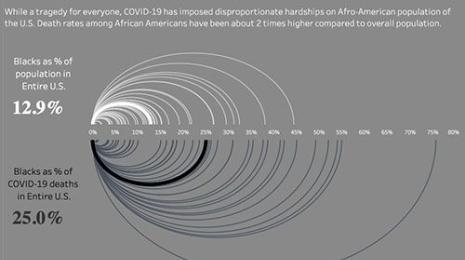 COVID-19
How to viz responsibly as you work with data on systemic racism in the U.S.
June 24, 2020
We know that many members of the Tableau community will be interested in visualizing data on everything from police brutality to systemic inequities to celebrations of Black success and more. We outline several important things to keep in mind when working with this data and welcome your feedback for more considerations that should be added to this list.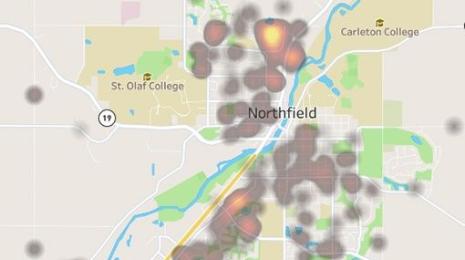 COVID-19
How this data-driven Minnesota school district is supporting students during COVID-19
May 6, 2020
As COVID-19 has progressed through the U.S. and states have implemented stay-at-home orders, nearly everyone’s lives have been disrupted. For schools and the kids who attend them, these changes have been particularly challenging. Instead of sitting with each other in classrooms, students are attending courses remotely, and interacting even more over screens than in real life. Without the usual face-to-face interactions, teachers are struggling to figure out how to assess student engagement and progress, and make sure their kids are feeling supported.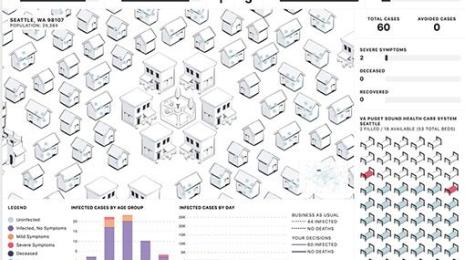 COVID-19
Social distancing: Three data-driven simulations will show you just how important it is
May 5, 2020
We’re now at the point where many countries, the U.S. included, are starting to look to the future and what needs to happen in order to safely begin to reopen parts of the economy. While the path forward is still uncertain, we’re beginning to understand that social distancing may be a fixture for many more months to come. A team of scientists at Harvard modeled the data and predicted that in the U.S., we may have to practice social distancing, at least in some capacity, through 2022.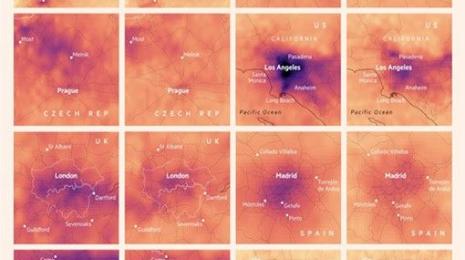 COVID-19
The most interesting data vizzes on COVID-19 we've seen in the media so far
April 20, 2020
The spread of COVID-19 around the world has set off a spike of interest in data visualizations. Everyone wants to see and understand how case counts are rising, what kind of impact the virus might have on themselves and their community, and what role they can play in slowing the spread.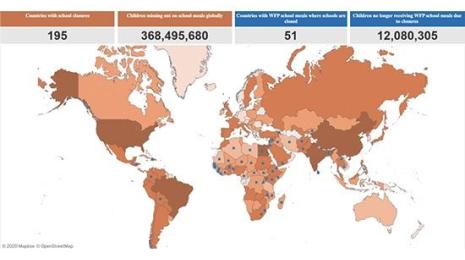 COVID-19
COVID-19 is closing schools, but the World Food Programme is using data to make sure kids still get meals
April 15, 2020
COVID-19 has upended communities and individuals’ lives across the world. While the focus is now on flattening the curve of the disease and keeping people healthy, it’s also important to understand the many other impacts of the virus. For the World Food Programme (WFP), the food-assistance branch of the United Nations and the world’s largest hunger-relief agency, program leaders immediately knew that the pandemic would pose a challenge to their programs—specifically, to schoolchildren’s access to food.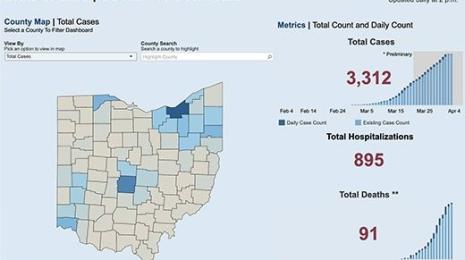 COVID-19
How governments are using Tableau to keep you up-to-date on the coronavirus
April 3, 2020
With the coronavirus continuing to spread through communities across the world, people are seeking information they can trust. And public officials are working as quickly as they can to make sure that people are able to access that information at the same time that they’re conducting their own internal data analysis to understand need and craft policies and strategies to respond to it.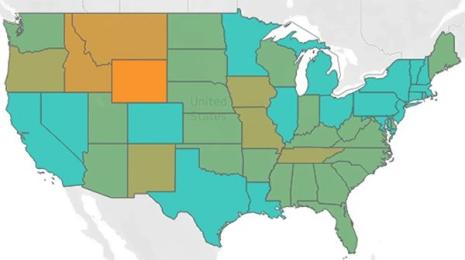 COVID-19
Flattening the curve: How well is your county doing coronavirus social distancing?
March 30, 2020
The coronavirus is spreading quickly through the United States, and many elected officials across the country are reacting with policies designed to slow the transmission of the pandemic, otherwise known as “flattening the curve.”