
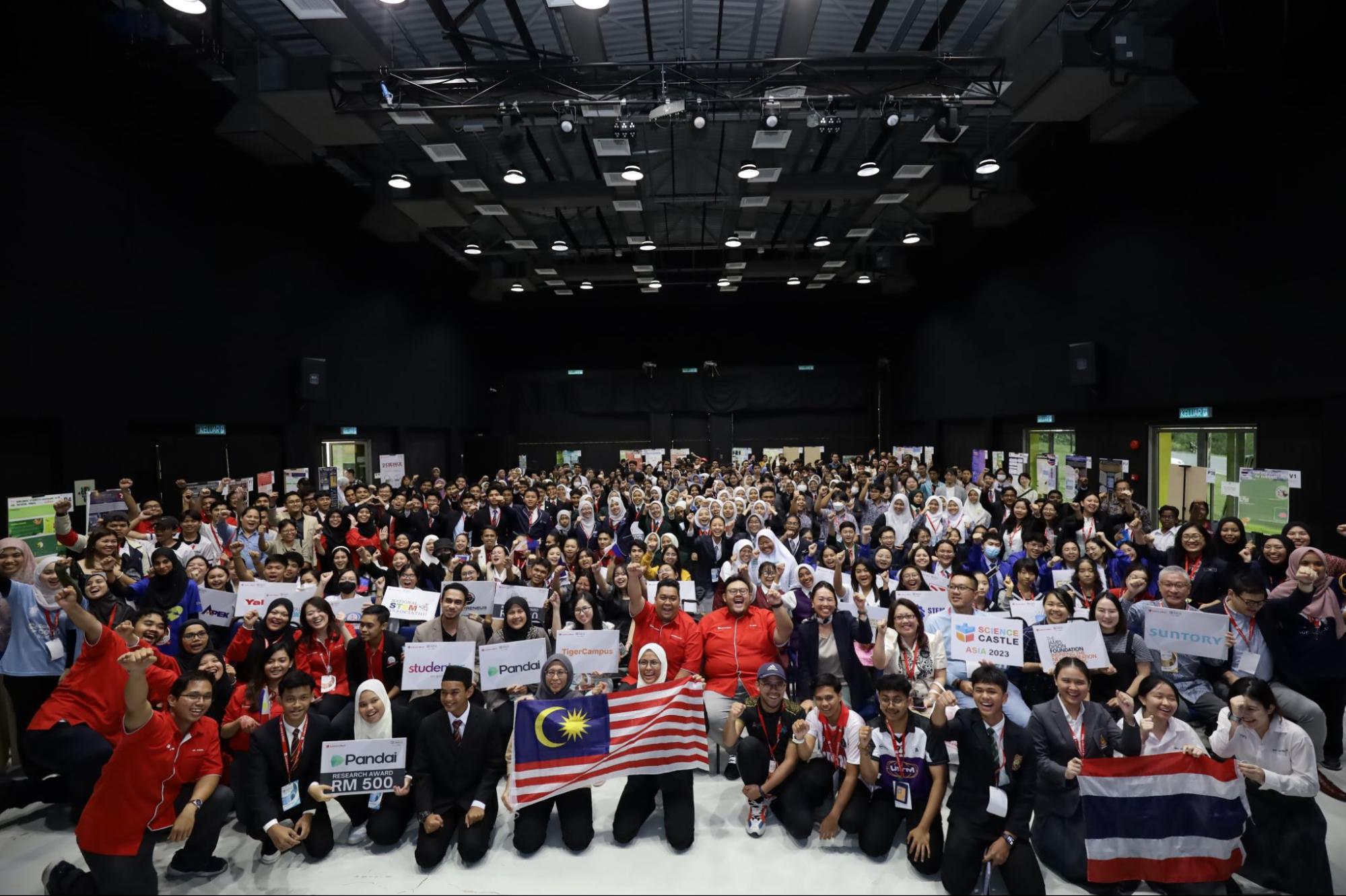
Leave a Nest Turns Data into a Profit Multiplier with Tableau Next and Slack
Improved analytics adoption among employees from 10% to 80%
Slashed time required to generate and respond to customer insights by more than 80%
Saved 4,500 hours per month across 150 employees
Leave a Nest leverages Tableau Next and Slack to transform its sales and marketing strategy, turning real-time event data into a competitive advantage and driving significant business results. By deploying an agentic solution accessible on mobile devices, they have empowered employees to recruit, promote, and track their industry conferences on the go, far more effectively than in the past.
About the Company
Tokyo-based Leave a Nest is the world's first startup to offer “knowledge manufacturing process technology” as a service. With offices in Singapore, Malaysia, the Philippines, the United Kingdom, and the United States, Leave a Nest holds knowledge-sharing conferences that bring together academic experts and companies in need of new product innovations. They also build R&D ecosystems that enable global startup and researcher networking, with a vision of “Advancing Science and Technology for Global Happiness.”
Tableau Next and Slack have given us the competitive advantage of running our events with much greater precision, leading to stronger connections and better outcomes for both researchers and industry partners. The most significant benefit is not just efficiency, but making things possible that were previously impossible.
The Challenge
Every year, Leave a Nest holds several large conferences that bring together corporations in search of new business concepts and product innovations with academic researchers offering ideas and concepts that need to be developed and productized. These conferences are at the core of Leave a Nest’s knowledge manufacturing as a service solution, so a critical part of ensuring the company’s success is recruiting poster presenters and managing attendee ticketing in the months leading up to each event.
Being able to deep dive into poster participants and analyze their profiles makes it easier to generate hypotheses for projects. Such groundwork is essential for knowledge manufacturing as a service, but until recently Leave a Nest did not yet have the capability to do so.
Traditionally, Leave a Nest’s dashboards only tracked high-level counts around conference registration and attendance, but the company needed to go deeper to:
- Understand which types of research papers attracted interest from participants
- Identify the backgrounds of researchers submitting posters
- Monitor ticket issuance in real-time rather than getting critical insights like low ticket sales too late, and balance promotion accordingly
Another practical challenge was giving employees access to insights that they could view and update as they moved around outside the office, visiting companies, and at universities. This was important to the company because using a laptop is often impractical on crowded subway lines such as those in Tokyo.
How Tableau Helps
Leave a Nest already had leveraged their core Salesforce platform for more than a decade, but needed a way to leverage the vast amount of data accumulated over time to further scale their business.
The answer came in Leave a Nest’s decision to build a new system infrastructure that integrated a wide range of Salesforce products, including Sales Cloud, Account Engagement, Heroku, Tableau Next, Agentforce, and Slack, all centered around Data Cloud.
Before introducing Data Cloud, Leave a Nest’s system faced challenges where each product held independent data, systems couldn’t directly reference data from each other, and metadata was distributed across systems.
Leave a Nest introduced Data Cloud to solve these challenges. Data Cloud breaks down data silos and harmonizes information from data lakes, warehouses, and applications. This creates a foundation for Agentforce to understand company-wide data comprehensively and recommend more accurate actions.
Enabling a trusted analytics agent for 100% of the business
Leave a Nest was encouraged by how easy it was to enrich data with business knowledge and make it AI-ready using Tableau Semantics, the semantic layer integrated into Data Cloud. The team also was pleased with how Semantics enabled the company’s new Agentforce agent to provide accurate answers, and how easily users could ask the agent a question in Slack and share the response with other team members.
Thanks to the tight integration between Tableau Next and Slack, Leave a Nest can:
- Enable collaboration around live data
- Bring an analytics agent to an entire team
- Set up users without a great deal of effort, even with its customized objects and mature Salesforce implementation
Companies have a lot of data, but it’s often not AI friendly. Using Tableau Semantics it was easy to change our non-AI friendly data to AI friendly data. The semantic layer enables Tableau Next to work for my business, even though we have mature, custom Salesforce implementations that go back ten years.
Continuous awareness from anywhere
Previously, checking a data point for a Leave a Nest employee required four steps: moving from Slack to Tableau, logging in, clicking the dashboard, and applying filters. With their new Tableau Next integration, users can view everything directly in Slack. The time reduction per query, from 30 seconds to five, is significant on its own considering Leave a Nest’s 150 employees, but the true benefit is that inquiries and responses generated in Tableau Next can be shared in Slack, and are accessible one-handed while commuting.
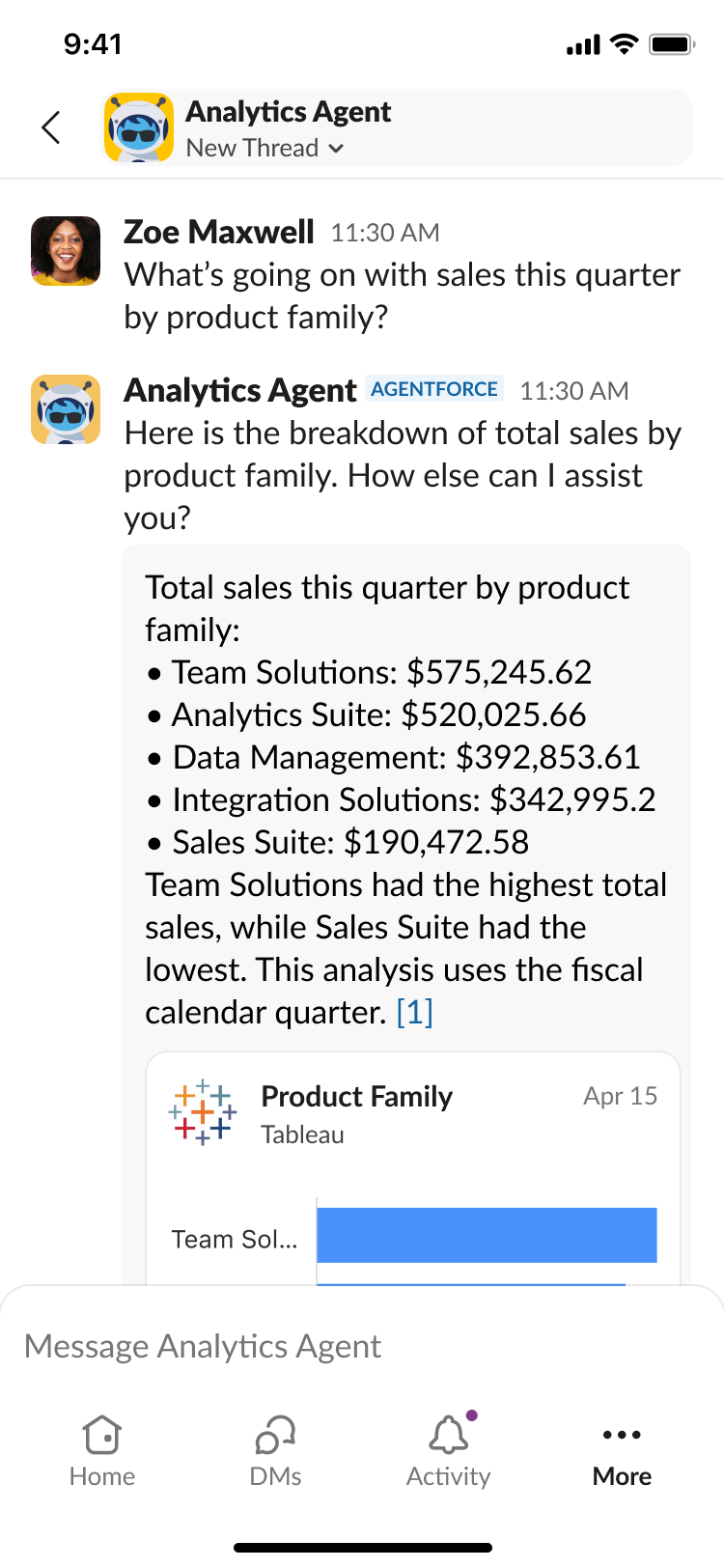
Leave a Nest’s staff can now access data insights in Slack on their mobile devices wherever they are.
Today, Leave a Nest uses Tableau Next and Slack to recruit, promote, and track their conferences far more effectively and easily than in the past. Not only do employees have intuitive dashboards, but they can also ask questions of their data directly in Slack on their mobile devices. This enables them to collaborate around trusted insights and visualizations to answer all their questions, and even to send messages to remind VIP attendees who have signed up for a conference but haven’t yet appeared at an event.
“Before Metrics in Slack canvas was introduced, it was almost as if we were operating without an internal clock,” Takeshi Hiratsuka said. “Combining Slack and Tableau Next significantly reduced the distance between our employees and the insights hidden in the data, making it easier and faster for them to engage with information in their daily work. If one research domain is underrepresented at a conference, we can see that and adjust outreach. Slack is the platform we use every day. Now it’s like having a pacemaker–a constant rhythm that helps us understand where we stand and how fast we’re moving toward our goals.”
The Tableau Difference
Tableau Next and Slack give Leave a Nest a competitive advantage, allowing them to proactively manage events with greater precision, leading to stronger connections and better outcomes for both researchers and industry partners. This advantage extends beyond the conferences themselves and into the partnerships they form through these events.
Just as important, Leave a Nest is creating a new mindset about data among its employees, and is showing them what it means, on a daily basis, to be a data-informed organization, to stay aware of its pace, and to empower people to be curious enough to turn data into action.
The results
- Time required to generate and respond to customer insights slashed by more than 80%
- 1-2 hours saved each day in time and analysis on insights. With more than 150 employees, this averages to 4,500 hours saved per month
- 10% of employees used data analytics before Tableau Next and Slack; now 80% do
Creating a future where data drives meaningful impact
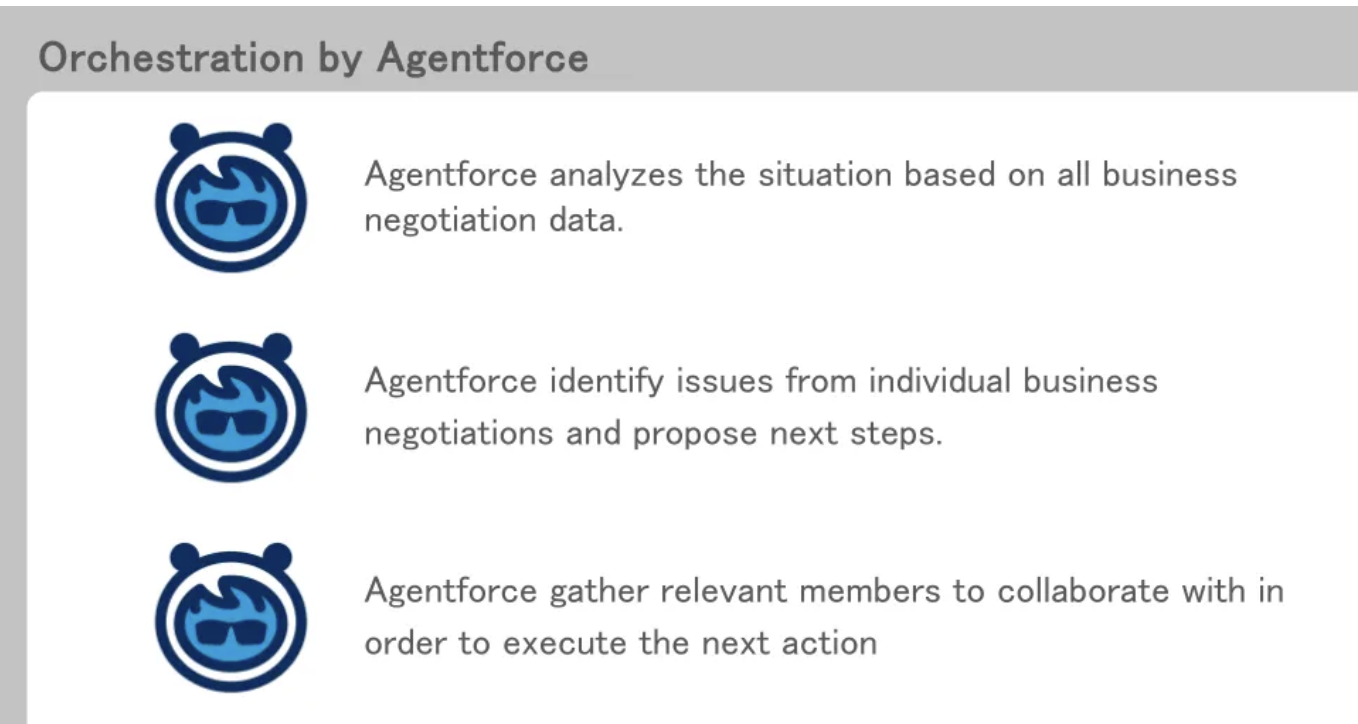
Leave a Nest envisions a future where several instances of Agentforce are orchestrated to work together on its data, analyzing overall opportunity data, identifying issues in individual opportunities and suggesting next actions, and gathering the right set of employees to execute those actions. In fact, they are already building toward this future thanks to Tableau Next.
Previously, only about 10% of employees were checking data daily. With this integration, now around 80% are doing so. This shift shows that we are moving much closer to a truly data-driven culture.