Data + Women: Advice from a Humanitarian Who Responds to Crises



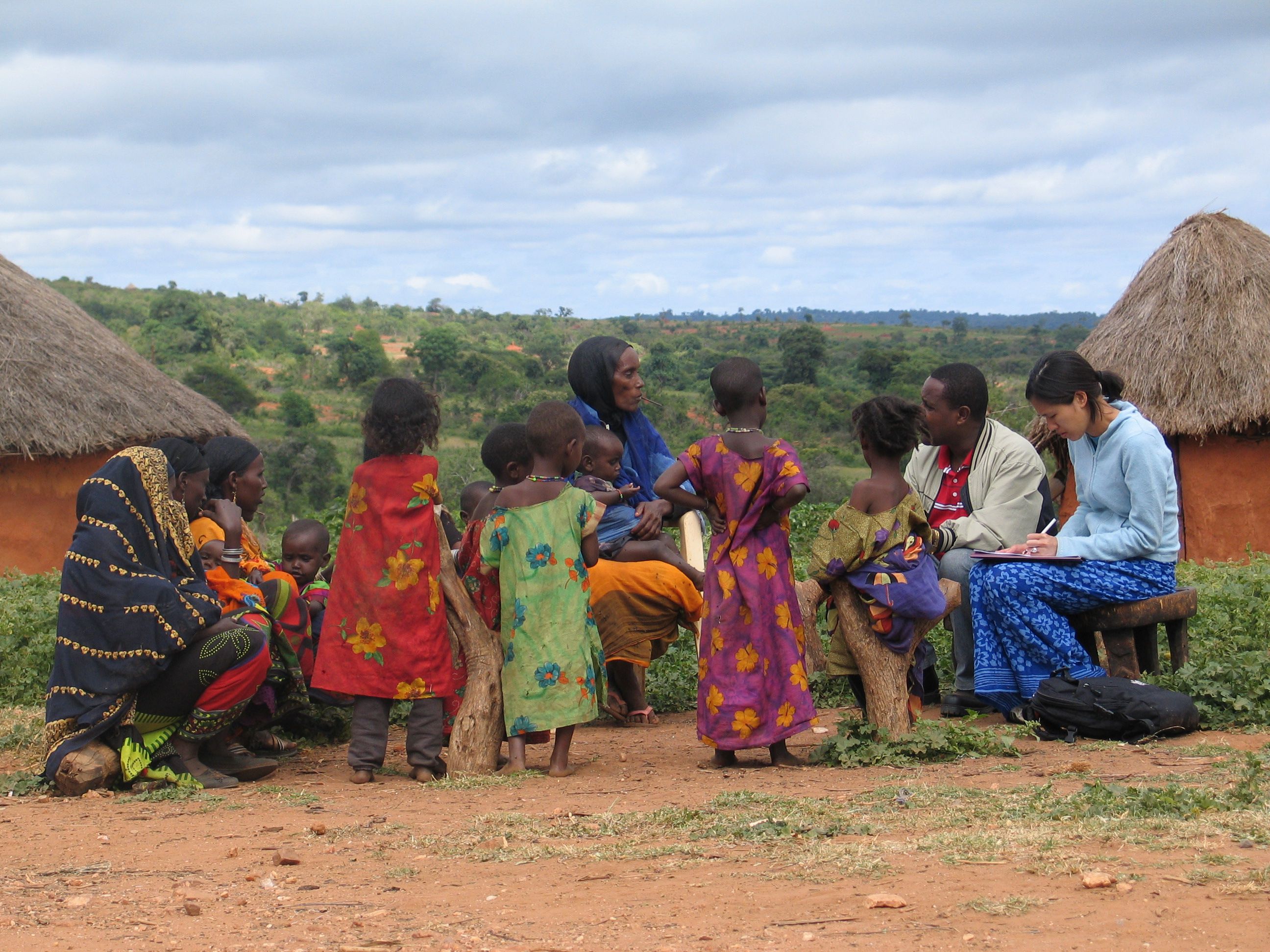
Jennifer Chan listens to Borena women in Ethiopia.
Note: This is the first installment of a four-part series highlighting our Data + Women panelists. The panel will take place at this year's Tableau Conference.
When disaster strikes, Jennifer Chan starts gathering data. Jennifer helps NGOs deliver humanitarian aid. But data can be hard to come by amid a crisis, especially in remote parts of the world.
“The format that it comes in can be anything from a spreadsheet to a paragraph, to a phrase in an email, to a PDF document. And it comes not in all one folder; it’ll come in bits and pieces all the time,” says Jennifer.
But Jennifer is no stranger to working with imperfect data. As an emergency doctor who currently works in the Department of Emergency Medicine at Northwestern Medicine in Chicago, she often has to make critical decisions about patient care with limited information.
“You get information from the ambulance over radio. You exchange information among your team to get ready. Then the patient comes in. You might get structured data that comes on a piece of paper from the nursing home. Maybe you open up a computer and look at a chart,” she says.
Jennifer’s Specialty: Using Data to Serve Those Affected by Crises
In both emergency medicine and crisis informatics, “there’s frequently no comprehensive database that you can download,” says Jennifer. But she relishes the challenge to wrangle fragmented data.
 She recently contributed to NetHope’s Ebola response program in West Africa. NetHope helps aid groups collaborate in disaster zones through smarter use of information and communications technology. Jennifer helped NetHope respond to one of the deadliest Ebola outbreaks in disease history, which quickly overwhelmed the public health systems in Sierra Leone, Liberia, and Guinea.
“It was not necessarily an uncharted disease; it was an uncharted public health crisis,” she says.
Jennifer helped coordinate volunteer groups and data analysts. The team distilled large volumes of data and shared the findings with aid groups on the ground. The insights empowered aid groups to make data-driven decisions and respond to fast-shifting priorities as they worked to stop the spread of the virus.
“We were able to open the doors, I believe, for our leadership to see what the power of data and visual analytics, when pointed toward a need, could potentially do,” Jennifer says.
More recently, Jennifer helped coordinate earthquake response efforts in Nepal by identifying the hardest-hit areas. These days, the team is focused on the refugee crisis in Syria and the Mediterranean.
It’s these times—when Jennifer can see how her work improves other people’s lives—that she feels most fulfilled. She still remembers one of her earlier projects in Ethiopia. There, she surveyed Borena women to set up a drought early-warning system.
“Going back to Ethiopia and constantly being humbled by what the data means to people totally reshapes the way that I’ve thought about data with effect to communities,” she says. “So those are some of the most rewarding times—not necessarily for the data, but for just the people-to-people contact.”
Advice #1: ‘Speak up and Step In’
As an accomplished scientist in the data industry, Jennifer has this advice for other women—and for her younger self, for that matter: “Speak up and step in.”
In her early days, Jennifer, by nature of her personality, wasn’t inclined to do either. But the demands of her emergency medicine residency soon necessitated both.
“I had to speak up. I had to step in. Because for certain types of patient care, I was the lead, and I needed to be heard,” she says.
Once she spoke up, she made a surprising discovery: “People were already listening,” she says. “They were waiting for me to speak up. It was just a matter of me stepping in.”
Advice #2: Build an Informal Mentorship
Throughout her career, Jennifer has built what she calls “an ad hoc network” of support. She has colleagues she can lean on for professional advice, collaboration, and even personal reflections on the emotional strain of crisis response. The system is informal—it doesn’t emphasize hierarchy or rigid structures—and that’s what makes it work, says Jennifer.
“So much of the ad hoc cross-support that I’ve had with women has been about breaking down those formal barriers and being flexible about the mentorship and support,” she says. “We talk about not just how you advance your career, but how you continue to be a person and who you are, and balance your life.”
She tries to provide this type of support to colleagues and mentees in her various areas of work in medicine, humanitarian response, and research.
“Their pathways may be different, but my job is to help them get there, wherever that may be,” she says.
Advice #3: Listen. Stay Agile. Bring People In.
As a physician who majored in bioengineering, Jennifer has worked in her share of male-dominant fields. She feels fortunate to be a part of NetHope, where she says the leadership welcomes both men and women equally.
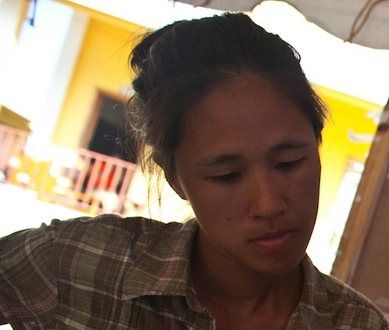 Still, she sees the need for more women in leadership roles, especially in the data sector. To that end, she urges women to delegate and coach whenever possible.
“That means really identifying those moments within the data space when people might just need skilled support, and determining when is the right time to delegate, and how to delegate it,” she says. “It’s not necessarily a playlist or a checklist; it’s a way of working. And that allows the data space to expand, cross disciplines, and bring more people in.”
As you delegate, you’ll gain space to think about direction—for your own career and life, for your team, and for your field. And once you’re on your way, don’t forget to pause and give others a chance to speak up and step in, says Jennifer.
“I’ve had great colleagues both at NetHope and among our online volunteer collaborators who really made the work what it is by saying, ‘We need to take a pause and make sure everybody feels comfortable, and has the instructions to move forward,”’ she says.
Nurturing that agile and collaborative spirit can help not only women but also their entire teams propel forward, says Jennifer.
“Try to be open-minded, constantly listening and acting at the same time, and bringing people in along the way,” she says.
Coming to this year’s Tableau Conference in Las Vegas? Meet our Data + Women panelists and join the conversation at our meetup on Monday, October 19. You can also share your thoughts on our Data + Women Community Forum.