
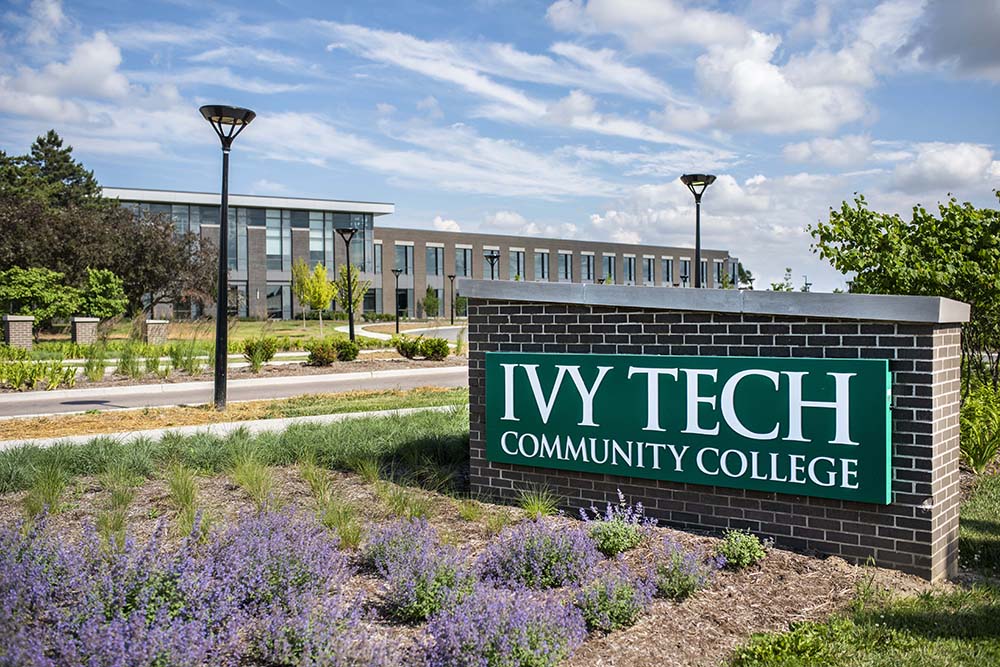
Ivy Tech, Indiana’s Largest Community College, Creates a Powerful Data Culture with Tableau Cloud
Over 2,100 active Tableau users of Ivy Tech’s internal BI and analytics platform
Tracking and analyzing wide range of data for more than 200,000 students
29% reduction in number of reports generated at 19 campuses throughout Indiana
Ivy Tech uses Tableau Cloud to track and analyze a wide range of data about more than 205,000 students for Fall 2025. By investing heavily in user training and ongoing engagement, Ivy Tech has built a data culture based on defining single sources of truth and highly configurable visualizations that can be tailored to specific needs for departments across the college.
About the Organization
Ivy Tech, America’s largest singly accredited statewide community college system, uses Tableau Cloud to track and analyze a wide range of data about more than 205,000 students for Fall 2025. By investing heavily in user training and ongoing engagement, Ivy Tech has built a data culture based on defining single sources of truth and highly configurable visualizations that can be tailored to specific needs for departments across the college.
What sets us apart is not just Tableau technology, but our shared approach to empowering users with data. We’re investing heavily in user training, data literacy, and open help sessions to ensure data isn’t just produced, but actually understood and used to drive outcomes.
The Challenge
Before adopting Tableau Cloud, Ivy Tech used an internally developed platform built on Pentaho that supported crosstabs and basic charts. Although this approach gave users the ability to self-serve and create ad hoc reports from a curated dataset, it also led to inconsistent methods for answering the same questions and hundreds of near-duplicate reports created by different people. With no single source of truth, there was little confidence in data presented and no shared data culture.
In addition to these challenges, Ivy Tech’s visualizations lacked the polished interactivity and intuitive design of modern BI tools. To meet its evolving objectives, the college needed a platform that allowed it to explore data intuitively, drive deeper insights, better track all the different types of data the organization runs on, and foster a stronger data culture.
When I joined the college nine years ago, I envisioned an executive dashboard to track our most critical metrics. Today, that vision is a reality. Thanks to our BI team and Tableau, leaders across all areas of the college — from our 19 campus chancellors to frontline staff — use our Tableau-powered IvyAnalytics dashboards to monitor performance, gain insights, and act with agility.
How Tableau Helps
Using Tableau Cloud has helped Ivy Tech advance several major initiatives:
- Elevating the quality of its business intelligence and institutional research initiatives
- Enabling deep analysis of data based on shared metrics
- Building a data culture where users are trained and supported at every step
Tracking what matters and responding with confidence
When some people think of higher education, they tend to picture an 18-year-old graduating high school and going on to college. Ivy Tech has a much broader charter. Its “Higher Education at the Speed of Life” strategic plan serves a strong adult continuing education community, local employer partners, and high school students who seek out dual credit and summer courses to better prepare them for a four-year university.
These populations require that Ivy Tech’s business intelligence and institutional research initiatives – collecting, analyzing, and reporting on data to support planning, decision-making, and policy development – cover a wide range of data points and sources. For example, what sorts of skills might a specific town’s employers need right now, or what kinds of courses would be most helpful for high school seniors?
Tableau Cloud has been an indispensable part of analyzing and disseminating this data, whether it concerns employer trends, student transfers, day-by-day enrollment, course completion and graduation levels, student retention, or even graduate wage outcomes over time.
The value of a single source of truth
A core element of Ivy Tech’s data strategy is to evolve users’ thinking from gathering their own data to inform specific projects to working with shared, trustworthy, college-wide metrics that inform and feed those projects.
By establishing a centralized data hub and well-defined guardrails, Ivy Tech has curated the 20 or so most essential Tableau dashboards used across the college into what they call the Essential Reports collection. This group of dashboards covers areas such as Enrollment, Retention, Strategic Metrics, and Campus Climate Survey results.
The BI team at Ivy Tech makes these reports as self-service and accessible as possible so that they serve the needs of 19 campuses and hundreds of staff and administrators. Detailed ReadMe pages accompany each report, documenting definitions and methodologies. Now, rather than having 50 reports for 50 different initiatives, Ivy Tech offers essential reports that allow users to filter the data to reveal insights that align with their specific questions and goals.
Having a base report in Tableau built and curated by our BI team and validated by the business before being published for statewide use has really increased confidence in the data. It also allows us to focus on training efforts around accessing and using reports instead of, ‘How do I build a report from scratch and make sure that I don't break anything?’
Building a data culture that welcomes everyone
Having base reports built and curated by the BI team and validated by the business before being published for statewide use has greatly increased confidence in data and allowed Ivy Tech to focus on training efforts around accessing and using reports versus building them from scratch.
Ongoing training and support are also essential. Ivy Tech offers monthly new user training that staff can register for and attend. These sessions cover how to access the data hub, how to use Tableau, how to find reports, and how to download data. Ivy Tech also holds open help sessions where users can ask the BI team questions, as well as weekly standing meetings with functional area leaders to review open ticket queues, prioritize work, and discuss new ways that they can visualize and present data.
The Tableau Difference
Because Tableau strikes a unique balance between technical depth and intuitive design, Ivy Tech analysts can build complex, multi-layered visualizations, while frontline staff or executives with limited technical training can easily interact with dashboards to explore data and answer their own questions.
Another differentiator is Tableau’s strong focus on data storytelling. The ability to build guided narratives, combine visuals seamlessly, and design dashboards that drive understanding and action has transformed how Ivy Tech communicates data. Many data platforms either focus on technical analytics or visuals, but Tableau integrates both in a way that is practical and powerful for decision-making.
Ivy Tech also appreciates being part of the Tableau Community, otherwise known as the DataFam. Feeling like a part of a broader analytics community is invaluable as Ivy Tech continues building a data-informed culture.
Creating a deeper engagement with data
In addition to using Tableau Cloud, Ivy Tech is piloting Tableau Pulse to analyze year-over-year enrollment data. Looking ahead, it has plans to expand its use for more advanced and strategic applications.
Ivy Tech is also considering Tableau Next, and sees a clear path to use its enhanced AI-driven analytics capabilities to surface insights more proactively for users. Instead of relying solely on manual exploration, advisors, faculty, and administrators could receive automated trend analyses, key driver insights, and anomaly detection within their dashboards, helping them quickly identify where to intervene to support student success or operational improvements.
Ivy Tech also could use Tableau Next to build more interactive, personalized dashboards, leveraging its capabilities for dynamic content tailored to individual users’ roles and objectives that helps them not only see data but understand the story it tells and the decisions it supports.
Swinging above its weight with a mature data approach
Today, Ivy Tech works at the cutting edge of community colleges and feels it is well positioned within higher education. The BI team reports out at conferences alongside universities with much larger teams and feels that Ivy Tech’s data culture enthusiasm, presentations, and data hub are cutting-edge among their peers.
At the same time, the college realizes that cutting edge requires continuous improvement. Ivy Tech is always scanning for opportunities to innovate further, whether through advanced analytics, predictive models to support student success, or expanding transparency through intuitive public-facing data assets.
Across Ivy Tech, users feel that its BI team’s work is not just operationally effective but strategically essential. The college has moved from a legacy infrastructure that was highly restrictive in terms of people getting access to data to more than 1,000 users who bring energy and knowledge to working with data.
IvyAnalytics on the Tableau platform has become an absolute game-changer for the college. I like to say most organizations are ‘swimming in data but starving for insights’. That is not the case at Ivy Tech. Since our enterprise rollout of Tableau in 2020, the college has embraced the power of the platform. Having everyone at the institution working from the same data has greatly increased both collaboration and strategic thinking, empowering Ivy Tech team members throughout the college.