What is Tableau Knowledge?




Enterprises are eager to scale agentic analytics to every user for faster, sharper insights. But without knowledge of how the business actually works, AI agents simply guess, leading to hallucinations, contradictions, and insights that can't be trusted. This isn't an AI failure. It’s a gap in knowledge.
The good news is organizations have invested years building business knowledge in the form of structured and unstructured data assets. This is everything from your Tableau published data sources, workbooks, and dashboards to data and semantics outside of Tableau, and of course the collective knowledge held by individual employees. But too often that knowledge is scattered, making it impossible to manage and optimize resulting in conflicting, duplicated, and outdated knowledge. Because of this, AI agents are unable to access the knowledge they need to deliver accurate insights.
"We are thrilled to empower enterprises to turn the data and semantics they've already activated across their deployments, into a trusted knowledge foundation for agentic analytics."
— Daniel Alon, Senior Vice President of Product, Tableau
The trusted foundation for governed enterprise knowledge
Tableau Knowledge enables organizations to harness all of their knowledge into graphs for AI agents. It captures published data sources, workbooks, dashboards, metrics and more from within Tableau, and soon other sources, unifying them into knowledge graphs, live networks of your data assets linked by relationship. From there, you and your team can inspect, curate, and enrich those graphs to reflect how your business truly operates. With a complete picture in hand, AI agents can efficiently retrieve the precise knowledge they need to intuitively reason and deliver accurate insights to your team's analytics questions.
A unified view of structured and unstructured knowledge
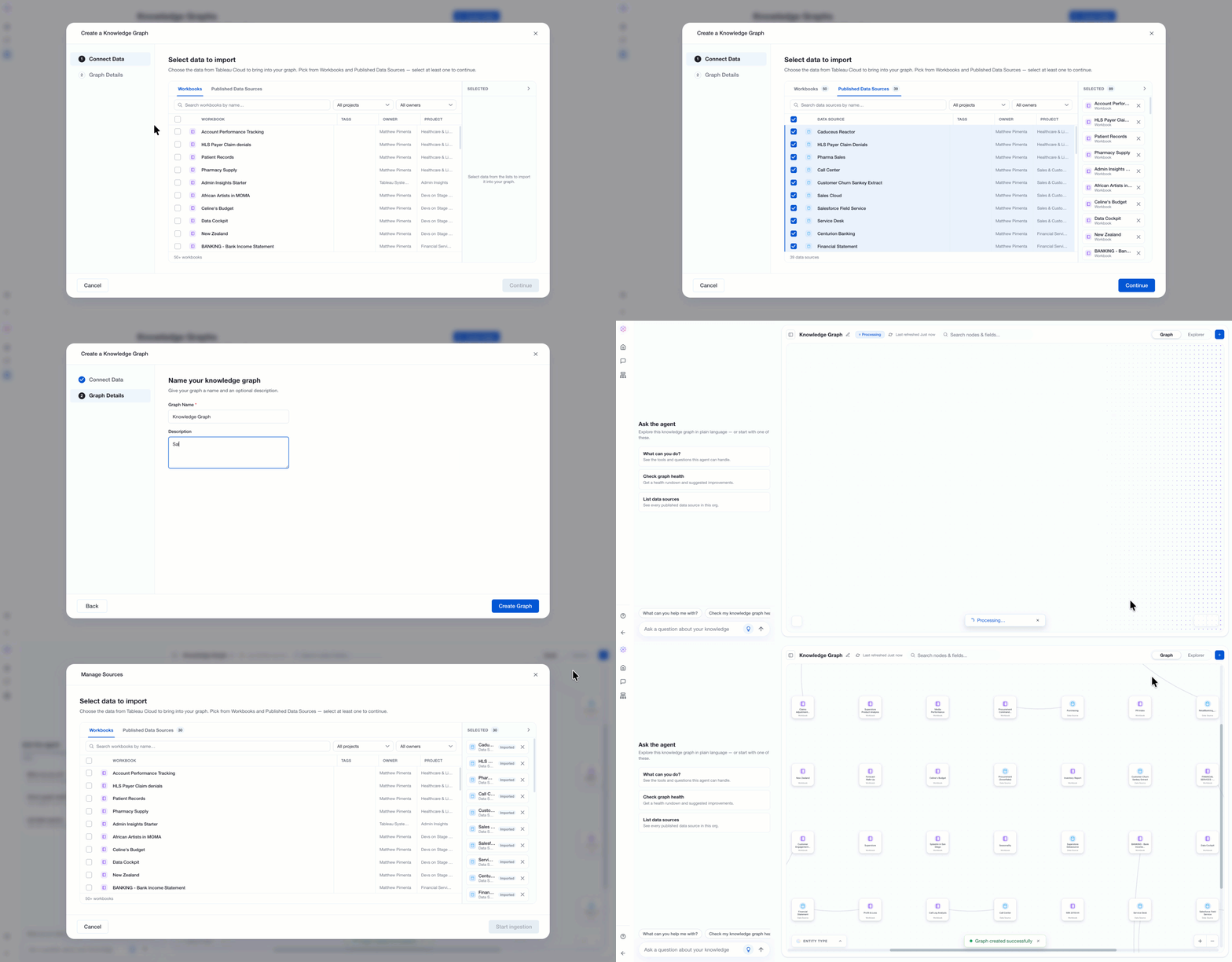
In Tableau Knowledge, you can bring together existing knowledge from across sources, activating years of analytics investments so you don't have to start from scratch. It harvests your Tableau assets like published data sources, workbooks, and dashboards and coming soon, you’ll be able to connect to structured and unstructured data from Snowflake, Databricks, Workday, and other sources.
Auto-generated, self-evolving knowledge graphs
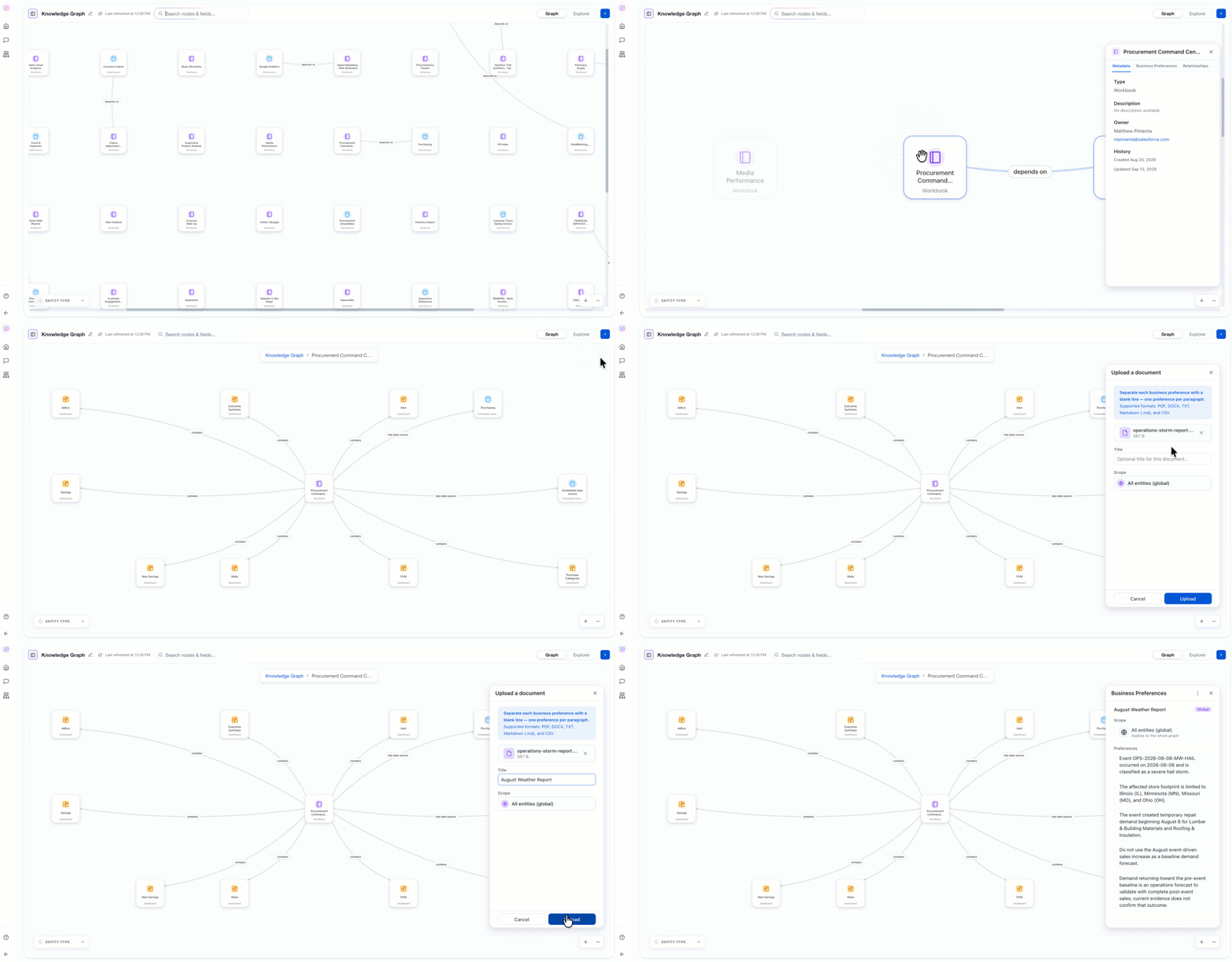
After you’ve connected to your data and semantics, Tableau Knowledge creates knowledge graphs by inferring relationships directly from the data source, no manual modeling required. The graph also stays current automatically: data source updates flow back to the graph, conflicts are continuously resolved, and improvements are suggested, while feedback from agent interactions downstream refine the graph further, ensuring that insights are grounded in the latest knowledge. And in the no-code interface, subject-matter-experts stay in control, inspecting, curating, and enriching the graph with business preferences, to create a comprehensive knowledge foundation agents can draw from.
Accelerated graph management with Tableau Agent, natively integrated
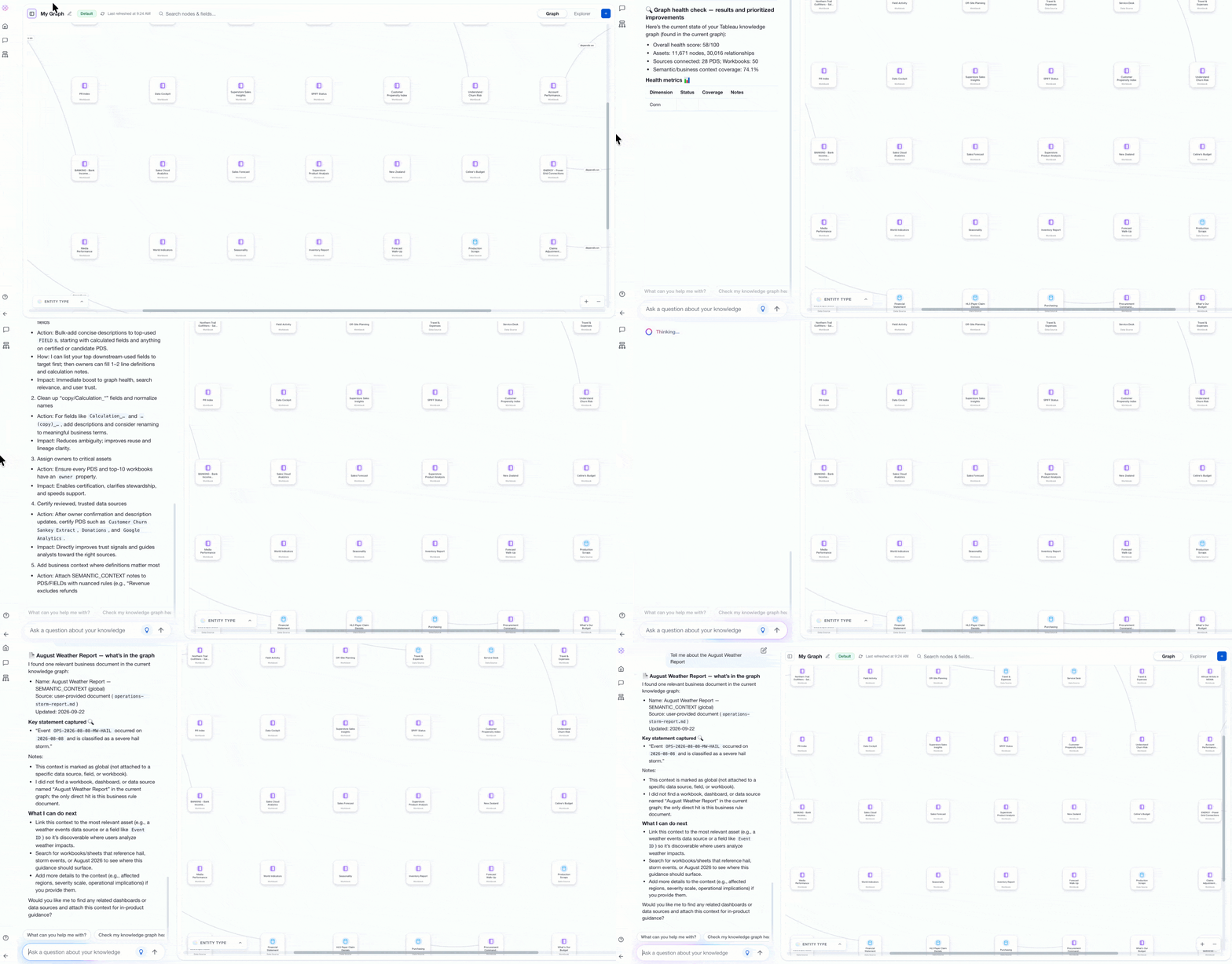
Tableau Agent is built into Tableau Knowledge to expedite graph exploration and management. It helps you explore and navigate the graph, track graph health, and identify which improvements to focus on. This is especially important for knowledge graphs spanning thousands of entities and relationships; instead of getting lost in the details, you can steward your organization’s knowledge at scale.
Trusted, governed knowledge powering your AI agents
Once your knowledge graph is built, it becomes accessible to Tableau Agent in dashboards and any AI agent via MCP. Graphs are the ideal structure for agents because they link data assets by relationship, similar to how the human mind connects ideas, letting agents reason the way an experienced colleague would. This structure also drives efficiency: rather than querying every data source in search of an answer, agents can retrieve the precise knowledge required, faster and cost effectively. The outcome is your team gets accurate insights grounded in trusted, governed knowledge wherever they work.
Why Tableau Knowledge is different
- Built for agentic analytics: Tableau Knowledge builds on your existing investments, in Tableau and beyond, turning years of analytics work into a foundation optimized for AI agents. Plus, it's MCP-enabled, so AI agents can access the graphs and agent feedback flows back to continuously refine them.
- Self-evolving knowledge: Tableau Knowledge continuously monitors your graph's health, surfacing conflicts and duplicates before they reach your AI agents. And because it’s native to Tableau, it captures real-time usage signals to continuously refine the graph and resolve conflicts, so the graph gets smarter the more you use Tableau.
- Knowledge curated by experts: Tableau Knowledge is no-code and intuitive by design, so anyone, not just data engineers, can curate and enrich your knowledge. This ensures that the subject matter experts closest to your daily business operations are also the ones shaping the knowledge that powers your AI agents.
Get started with Tableau Knowledge
Tableau Knowledge is available now in the Tableau Cloud+ and Tableau+ editions and coming soon to Tableau Server and Tableau Next. To get started, contact sales to speak with an expert.
To learn more, watch the Dreamforce 2026 keynote and theater session, then register to watch the webinar.
Autres sujets pertinents
Trusted Knowledge Drives Smarter Decisions—How Tableau Approaches Agentic AI Differently
 5 Mai, 2026
What is Tableau Next?
12 mars, 2026